Our philosophy
Holistic Dental Care Focused on Airways, Minimising Extractions & Guiding Facial Profiles
Treating Causes, Not Just Symptoms.
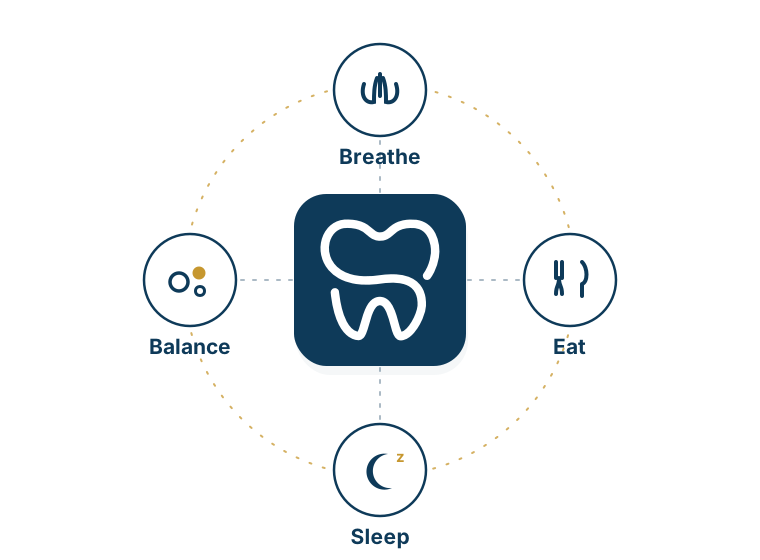
We are changing what it means to be your dentist. Most dental problems don't start in the tooth that hurts. They start with how you breathe, eat, sleep, and the balance of bacteria in your mouth. Treat those, and you fix causes instead of chasing symptoms.
- GentleOur goal is to give you gentle, thorough treatment and care, at your pace. Nervous patients welcome, and sedation options are available.
- MindfulFrom day one we aim to keep you smiling at all times, yes, even during your treatment.
- HolisticOne team for your check-ups and your orthodontics, planning both around your breathing, sleep and long-term health.
Airway First
Every check-up looks at breathing, sleep signs and tongue posture. For kids and adults.
Keep Your Teeth
Small fixes early. Pulling teeth is the last resort, not the plan.
Your Choice
Fluoride-free cleans Coming soon. Amalgam-free fillings, and honest talk about every option.
Team Care
We work with GPs, ENT doctors, sleep doctors and speech therapists when needed.
The mouth-body link
Problems That Can Start in the Mouth
- Heart healthGum disease is linked with heart disease. Healthy gums lower inflammation. — Sanz et al., Journal of Clinical Periodontology, 2020
- DiabetesGum disease and blood sugar affect each other both ways. We work with your GP. — Simpson et al., Cochrane Database of Systematic Reviews, 2022
- Brain and moodGum-disease bacteria have been found in Alzheimer's-affected brains, and gum disease is linked with depression in meta-analyses. Association, not cause, but reason enough to care for both together. — Dominy et al., Science Advances, 2019 · Araújo et al., Journal of Clinical Periodontology, 2016
- SleepSnoring and grinding are often airway stories. We screen and refer when needed. — DiFrancesco et al., International Journal of Pediatric Otorhinolaryngology, 2004
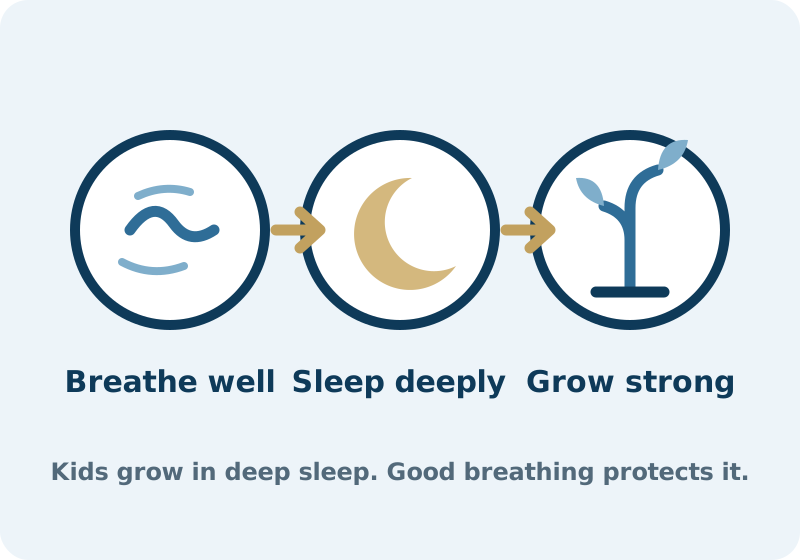
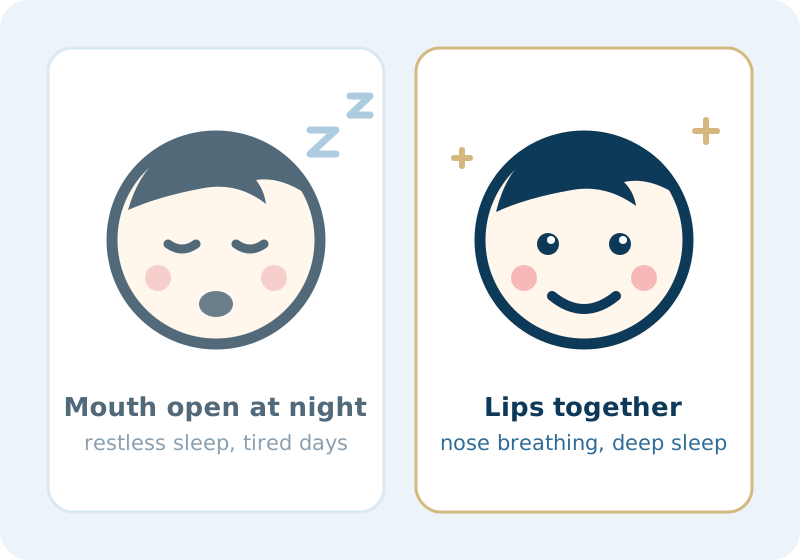
- Kids' growth and focusMouth breathing spoils sleep. Poor sleep spoils growth and focus. See how we help. — Bonuck et al., Pediatrics, 2012
- FeedingTongue-ties can make feeding hard for babies. We check and treat them Coming soon. — O'Shea et al., Cochrane Database of Systematic Reviews, 2017
- Headaches and jaw painClenching and grinding can drive them. We can help.
These are links shown by research, not promises of cure. Medical problems still need your doctor. We work together.
The bigger picture
How Your Dental Health Directly Impacts Your General Wellbeing
Your oral health, jaw alignment & palate can affect how you breathe, sleep & face develops.
We'll explain the interesting scientific links between narrow paletes, crowded teeth, oral disease and systemic conditions such as cardiovascular disease and diabetes, and why establishing a healthy airway through childhood to adulthood, with orthopaedic and/or orthodontic treatment where needed, matters so much.
What holistic actually means
Your Mouth Affects Your Whole Body
This isn't a marketing word for us. Three real connections drive how we practise:
- The oral microbiomeYour mouth hosts billions of bacteria. Inflamed gums give them a doorway into your bloodstream, which is why gum disease is linked in research with heart disease and diabetes.
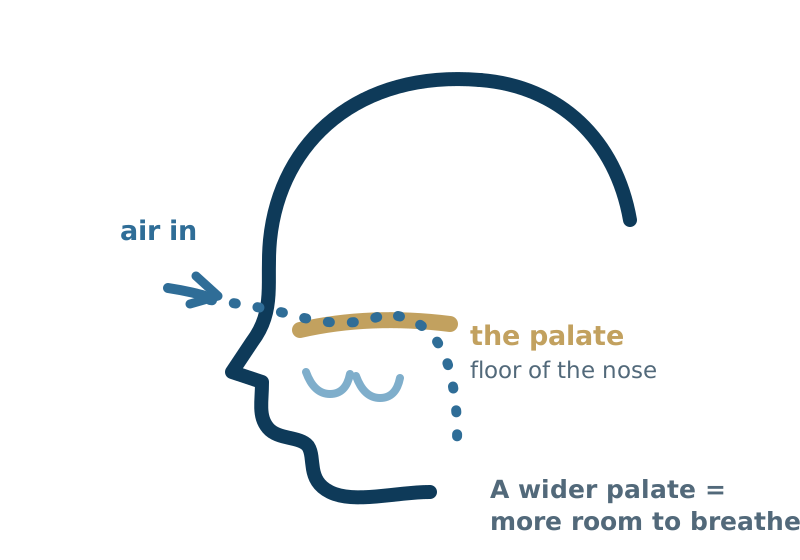
- The airwayThe roof of your mouth is the floor of your nose. A narrow palate means crowded teeth and less room to breathe, and that affects sleep, energy and how a face grows.
- Your teeth themselvesEvery natural tooth is worth keeping. Our orthodontic planning grows the jaw to fit the teeth rather than pulling teeth to fit a small jaw, which also protects the profile of the face.
Not our opinion. Research.
The Evidence Behind Our Approach
You shouldn't have to take a dentist's word for it. Here is a sample of the published research that shapes how we treat:
Blocked nasal breathing changes how faces grow. Classic experiments found that obstructing nasal breathing in primates altered jaw growth and produced malocclusion, and studies of children with enlarged adenoids documented the same pattern of longer, narrower facial growth.
Harvold et al., American Journal of Orthodontics, 1981 · Linder-Aronson, Acta Oto-Laryngologica, 1970Poor night-time breathing is linked to behaviour and focus problems in children. In a cohort of over 11,000 children, sleep-disordered breathing in early childhood was associated with behavioural difficulties, including hyperactivity, at age seven. Related work found these problems often improve after the airway obstruction is treated.
Bonuck et al., Pediatrics, 2012 · Chervin et al., Pediatrics, 2006Teeth grinding in children is strongly tied to the airway. Studies of children who had enlarged adenoids and tonsils removed report large reductions in grinding after surgery, in one study falling from 25.7% of children to 7.1%.
DiFrancesco et al., International Journal of Pediatric Otorhinolaryngology, 2004 · Eftekharian et al., 2008Widening a narrow palate can improve nasal breathing. Systematic reviews report that maxillary (palatal) expansion increases nasal cavity width and can reduce nasal airway resistance, with effects maintained long term.
Baratieri et al., American Journal of Orthodontics and Dentofacial Orthopedics, 2011Children grow during deep sleep. Growth hormone is secreted mainly during deep, slow-wave sleep, which is exactly the sleep that snoring and obstructed breathing disrupt.
Takahashi et al., Journal of Clinical Investigation, 1968Treating gum disease helps control diabetes. A Cochrane review found periodontal treatment produces a meaningful reduction in HbA1c (a key blood-sugar measure) in people with type 2 diabetes. Gum disease is also recognised as being associated with cardiovascular disease in international consensus statements.
Simpson et al., Cochrane Database of Systematic Reviews, 2022 · Sanz et al., Journal of Clinical Periodontology, 2020The mouth-brain link is real research, not a wellness meme. Gum-disease bacteria and their enzymes were found in the brains of people with Alzheimer's disease, and meta-analyses link gum disease with depression and cognitive decline. Associations, not causes, and exactly why gum care is health care.
Dominy et al., Science Advances, 2019 · Araújo et al., Journal of Clinical Periodontology, 2016The tongue matters more than you'd think. A short, tight tongue-tie is a frequent finding in children with sleep apnoea, and tongue exercise therapy roughly halved sleep-apnoea severity in adults in a meta-analysis. It's why we check tongue function, not just teeth.
Guilleminault et al., ERJ Open Research, 2016 · Camacho et al., SLEEP, 2015Early assessment is the professional standard. The American Association of Orthodontists recommends every child have an orthodontic check-up no later than age seven, while the jaws are still growing and problems are simplest to correct.
American Association of Orthodontists, aaoinfo.orgDr. Sofia Monter trained in an airway-focused orthodontic approach: assess early, look at breathing and sleep rather than just crowding, expand rather than extract, and refer to ENT and sleep physicians when the airway needs medical care. The studies above describe associations found in research, not guarantees about any individual's results.
For kids and adults
The Right Treatment at the Right Time
For kids, timing is everything. We recommend a first check-up by 12 months of age, then a growth and airway assessment around age five, when jaw growth can still be guided gently. Snoring, mouth breathing, grinding and crowded teeth are the signs worth checking, and plenty of kids simply get the all clear.
For adults, it's never too late, and nobody has to know. Clear aligners and tooth-coloured braces both straighten teeth without the metal look. And if you grind, wake unrefreshed or live with jaw pain, the airway side of our assessment often explains why repairs keep failing.
Gentler by design
Simple, Honest Choices
- Fluoride-free cleans Coming soonJust ask. We plan your prevention around your wishes and your risk.
- Amalgam-freeTooth-coloured, mercury-free fillings.
- Less drillingWe catch problems early so fixes stay small.
- Real informed consentEvery option explained in plain words. You choose.
Common Questions
Do you offer fluoride-free cleans? Coming soon
Yes. Just ask when you book. We explain the pros and cons and you choose. We've written an honest guide to fluoride, the recent studies and the evidence-based alternatives.
Are your fillings amalgam-free?
Yes. Tooth-coloured and mercury-free, bonded so we keep more of your tooth.
Can you cure things like ADHD or heart disease?
No, and be careful of anyone who says they can. We treat the mouth and airway side and work with your doctors. Better breathing, sleep and gums support your health. Medical problems still need medical care.
How is the mouth connected to the rest of the body?
Gum disease is linked in research with heart disease and diabetes. The mouth is also the start of the airway, and mouth breathing and narrow jaws have been linked with sleep and growth problems in some children.